


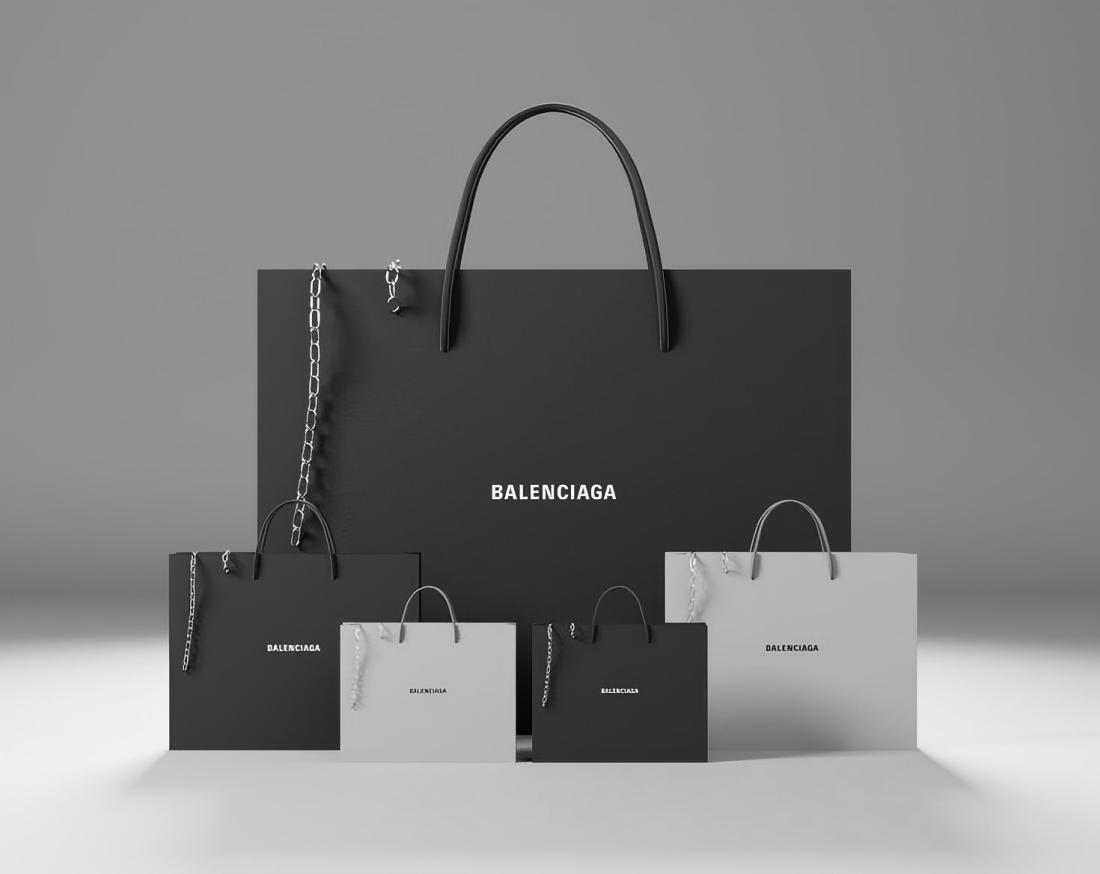
A paper bag factory with 20+ years of experience breaks down the key dimensions of procurement decision-making — transparently.
【Opening·A Repeatedly Verified Truth】
We‘ve been making paper bags for over two decades. During this time, we’ve seen countless buyers struggle with the same problem:
The same specification paper bag. Supplier A quotes $0.08. Supplier B quotes $0.12. Supplier A looks like the cheaper choice — until the shipment arrives. You find underweight paper, off-color printing, handles that don‘t hold. Customer complaints come in. Brand image suffers. Someone gets held accountable.
This isn’t a product problem. It‘s a decision-making framework problem.
In paper bag procurement, unit price is never the most important variable. Delivery reliability, quality control, after-sales support — these invisible dimensions determine whether your procurement succeeds or fails.
This is not a product catalog. This is a paper bag procurement decision reference built on 20+ years of factory experience.
Four Core Dimensions of Paper Bag Procurement — What You Should Really Look For
Paper bag procurement is a multi-dimensional decision. We’ve broken it down into four core dimensions.
Dimension One — Supplier Authenticity and Legitimacy
One of the biggest risks in procurement is finding a supplier that looks like a factory but isn‘t. Trading companies aren’t necessarily problematic — the issue is when you think you‘re dealing directly with a factory, but there’s an extra layer in between.
A genuine factory should have the following characteristics:
·Verifiable business license and export qualifications — legitimate factories have complete registration and export permits
·Physical factory address — a verifiable manufacturing location, not just an office address
·Transparent production site — ability to provide workshop photos or videos, and welcomes factory visits
·Traceable export history — a consistent export record, not a recently established or unsubstantiated entity
Paper bag procurement isn‘t just buying a product — it’s choosing a partner. The wrong supplier affects not just one shipment, but your entire supply chain stability.
Dimension Two — Production Capacity and Delivery Reliability
The lowest unit price means nothing if your supplier can‘t deliver on time. When capacity falls short, suppliers may outsource orders to unchecked downstream factories — leading to quality loss and delayed delivery.
Key metrics for evaluating supplier production capacity:
·Daily output — understanding factory capacity limits to assess whether your order volume can be met
·Level of automation — modern automated lines significantly improve production efficiency and product consistency
·Peak season delivery record — inquiry into the supplier’s historical delivery performance during procurement peaks
·Factory scale — direct factories typically have larger capacity and more stable quality control
Experienced factories know how to plan production schedules and allocate capacity during peak seasons to ensure on-time delivery.
Dimension Three — Quality Management System and Inspection Processes
Paper bags may look simple, but quality control runs through every production stage. A sound quality management system includes:
·Incoming material inspection — verifying that raw paper weight, material type, and certifications (e.g., FSC) meet specifications
·In-process inspection — real-time checks on print color calibration, die-cutting precision, and handle adhesion at each production stage
·Final random inspection — batch sampling for dimensions, print quality, pull strength, and adhesive integrity before packaging
·Third-party certifications — ISO 9001 quality management, BSCI social compliance, FSC forest certification, and others
These quality control processes directly determine whether every batch of paper bags is consistently up to standard.
Dimension Four — Compliance and Sustainability
Compliance has shifted from “nice-to-have” to “must-have.” When procuring paper bags, consider:
·FSC certification — ensuring paper comes from sustainably managed forests
·Water-based inks — reducing VOC emissions, meeting environmental printing standards
·REACH compliance — meeting EU chemicals regulation requirements
·Food contact safety — FDA or EU food contact material standards when used for food packaging
Compliance isn‘t just a regulatory requirement — it’s part of your brand image. Choosing a compliant supplier means mitigating compliance risks for your brand.

Five Costly Mistakes in Paper Bag Procurement
Based on two decades of industry observation, here are the most common mistakes buyers make.
Mistake One — Using “Lowest Price” as the Only Decision Criterion
The supplier with the lowest unit price is often the one with the most inconsistent quality and unreliable delivery. When 2% of paper bags fail, the hidden costs of emergency reorders, customer complaints, and brand damage far exceed the few cents saved.
In paper bag procurement, you should be calculating total cost of ownership, not unit price.
Mistake Two — Ignoring Specification Details
Unclear procurement specifications are the root cause of many procurement failures. “Kraft paper” isn‘t one material — paper weight, virgin pulp ratio, and surface treatment all affect cost and quality.
Getting the specifications right is the first — and most critical — step in procurement.
Mistake Three — Placing Orders Without Testing Physical Samples
Looking at product photos and holding the actual bag are two different things. Paper texture, print color accuracy, handle pull strength — these must be tested by hand. Before mass production, always request physical samples from your supplier for testing. This is a necessary step to avoid costly mistakes.
Mistake Four — Underestimating Lead Times
Custom paper bags go through multiple stages: plate-making, sampling, production, and shipping. From order confirmation to receipt of goods, the process typically takes 4-6 weeks or longer. Failing to allow sufficient lead time risks running out of stock during peak seasons.
Mistake Five — Overlooking After-Sales Service Capability
Procurement isn‘t a one-time transaction. Quality issues discovered after delivery, specification adjustments needed for the next order, problems during logistics — all of these require responsive supplier support.
Global Paper Bag Market — Why Procurement Decisions Are Becoming More Critical
The global paper bag market is projected to grow from $6.43 billion in 2025 to $8.86 billion by 2030, at a CAGR of 6.7%. Key growth drivers include increasing implementation of plastic ban regulations, rising demand for sustainable retail packaging, expansion of e-commerce packaging needs, and innovation in paper bag durability. Paper bags have evolved from disposable consumables into brand assets.
In this rapidly changing market, choosing a reliable paper bag supplier is not just a procurement decision — it‘s a strategic investment.
Who We Are — 20+ Years of Paper Bag Manufacturing Experience to Inform Your Procurement Decisions
We’re a Chinese paper bag factory with over 20 years of experience. Over two decades, we‘ve built:
·Stable export track record — shipping to North America, Europe, Australia, and Southeast Asia
·Comprehensive certifications — ISO 9001, FSC, BSCI, SGS, and others
·Mature production capacity — multi-color offset presses and automated bag-making equipment
·Strict quality control — every batch inspected from raw material to finished product
·Flexible service models — low MOQ support and fast sample turnaround
This is not an ad. This is a paper bag procurement decision reference from a factory with 20+ years of experience.
“Procurement Decision Consultation” Service Now Available
To accompany this release, we are launching a dedicated service: Procurement Decision Consultation.
When you request a quote from us, you‘ll receive not just pricing, but:
·A procurement decision checklist to help you evaluate suppliers across all key dimensions
·A line-item quote breaking down costs for materials, printing, handles, packaging, and logistics
·Guidance on specification details — clarifying paper weight, material options, print techniques, and more
First 30 businesses to submit an inquiry will receive a free sample pack (3-5 physical samples) plus a customized cost analysis report (shipping fee applies).
Email: janice@yuanxupaperbag.com
Inquiry Hotline: +86 0133 9275 2288
Website: https://www.yuanxubag.com/
We welcome new and existing clients to visit our factory—a professional paper bag manufacturer should be transparent about its entire production process.
Post time: May-08-2026